
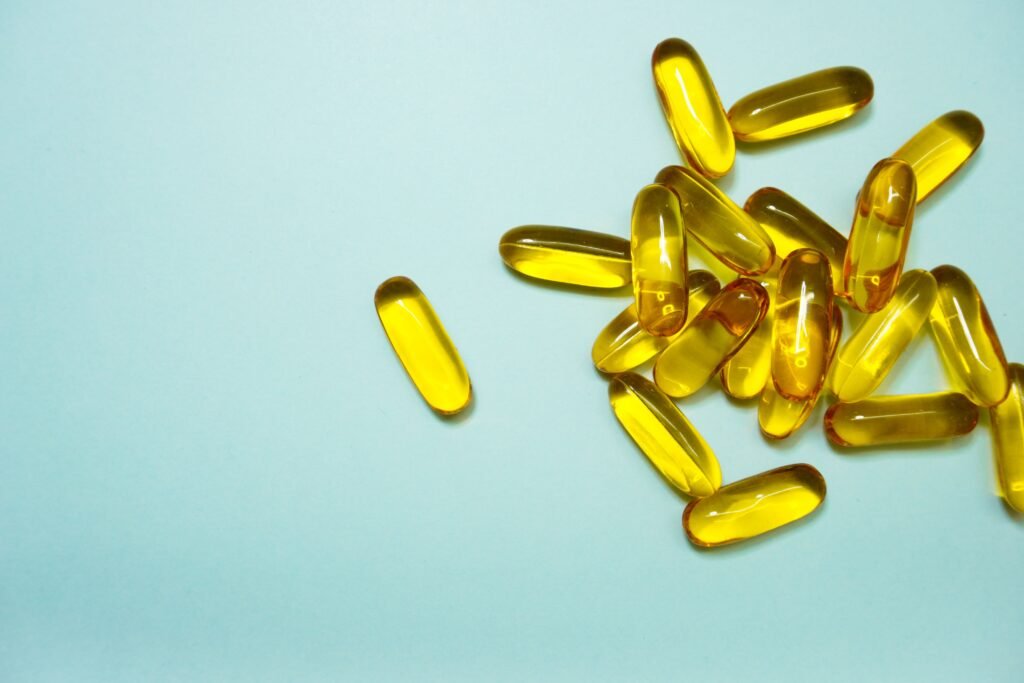

Fish oil is often marketed for heart health, brain function, and mood support. But can fish oil help with depression, and does the type of omega-3 fatty acid make a difference?
Research suggests that omega-3 fatty acids may help reduce depressive symptoms in some circumstances, although the evidence remains mixed. A 2019 meta-analysis published in Translational Psychiatry examined 26 randomized, placebo-controlled trials and found a small overall benefit. The researchers also found that supplements containing a higher proportion of EPA appeared more promising than DHA-dominant formulations in certain analyses.
Understanding these findings can help explain what omega-3 supplements may offer, where the evidence falls short, and how they fit into a broader approach to depression treatment.
What Did the 26-Study Review Find?
Researchers led by Yuhua Liao analyzed 26 randomized, placebo-controlled trials involving 2,160 participants to investigate whether omega-3 polyunsaturated fatty acids (PUFAs) could improve depressive symptoms.
The analysis examined trials available through the end of 2017, comparing omega-3 supplementation with placebo and investigating whether results differed according to supplement composition and dosage.
Published in 2019, the meta-analysis reported a small but statistically significant overall improvement in depressive symptoms, with a standardized mean difference of −0.28 (p = 0.004).
Although this result suggests a potential benefit, it does not mean everyone taking fish oil will experience an improvement. The studies differed in their participants, formulations, dosages, and other characteristics, making it difficult to determine how consistently the findings apply to people with depression.
The researchers’ subgroup analyses offered another important observation: the proportion of EPA and DHA in a supplement appeared to matter.
EPA vs. DHA: Which Omega-3 Is More Promising for Depression?
Fish oil contains two primary omega-3 fatty acids: eicosapentaenoic acid (EPA) and docosahexaenoic acid (DHA). Both have important biological functions, but they are not interchangeable in every context.
EPA and Depression
EPA participates in inflammatory signaling and other biological processes that researchers have investigated in relation to depression.
In the 2019 meta-analysis, EPA-only and EPA-dominant formulations showed potential benefits in certain subgroup analyses. Formulations containing at least 60% EPA appeared more promising than those dominated by DHA.
These findings have contributed to scientific interest in EPA as a potential adjunct to conventional depression treatment. However, they do not establish that EPA is an effective antidepressant on its own or that every EPA-rich supplement will improve symptoms.
DHA and Depression
DHA is an important structural component of cell membranes, particularly in the brain and retina. It supports normal neurological function, but its importance to brain health does not automatically establish a benefit for treating depression.
In the 2019 analysis, DHA-dominant formulations did not demonstrate a statistically significant antidepressant effect. However, the number of trials examining DHA-only formulations was limited, so the findings cannot establish that DHA has no potential role in mental health.
The key distinction: EPA-rich formulations appeared more promising in this particular review, but further research is needed to establish which formulations may help, for whom, and under what circumstances.
Does EPA Dosage Matter?
The researchers also examined whether the amount of EPA influenced the results.
Certain subgroup analyses found significant benefits with EPA-only or EPA-dominant formulations providing no more than 1 gram of EPA daily. Higher-dose subgroups did not show the same consistent pattern of benefit.
This does not prove that lower doses are always more effective or establish a universally appropriate dose for depression. Subgroup findings can be influenced by differences between studies, including the characteristics of participants and the treatments being evaluated.
It is also important to distinguish the total amount of fish oil from the actual EPA content. A supplement labeled as containing 1,000 mg of fish oil does not necessarily provide 1,000 mg of EPA.
Anyone considering omega-3 supplements for depression should discuss the product, dose, and potential interactions with a qualified healthcare professional rather than selecting a dose based on a single meta-analysis.
How Might Omega-3 Fatty Acids Affect Depression?
Depression involves a complex combination of biological, psychological, social, and environmental factors. Researchers have proposed several mechanisms that could help explain why omega-3 fatty acids might influence depressive symptoms.
- Inflammatory pathways: EPA and DHA participate in processes involved in inflammation and cellular signaling. Because inflammatory activity has been associated with depression in some individuals, researchers are investigating whether omega-3 fatty acids could influence symptoms through these pathways.
- Cell membrane function: DHA is an important component of neuronal cell membranes. Omega-3 fatty acids may influence membrane properties and cellular communication, although the connection between these effects and meaningful improvements in depression remains uncertain.
- Neurobiological signaling: Researchers are also examining how omega-3 fatty acids interact with biological pathways involved in neurotransmission and mood regulation.
These mechanisms offer possible explanations for the observed findings, not proof that depression is caused by inflammation or that fish oil corrects an underlying chemical imbalance. More research is needed to understand which mechanisms are clinically relevant and whether specific patient groups are more likely to benefit.
Can Fish Oil Replace Antidepressants?
No. Fish oil should not be considered a proven replacement for antidepressants, psychotherapy, or other evidence-based depression treatments.
Some studies have examined omega-3 supplementation as an addition to conventional treatment rather than as a standalone intervention. However, the strength of the evidence varies, and the 2019 meta-analysis does not establish that supplementation is appropriate for everyone experiencing depression.
Depression treatment should account for symptom severity, medical history, current medications, personal preferences, and response to previous treatment. Depending on the individual, appropriate care may involve psychotherapy, medication, lifestyle considerations, or a combination of approaches.
If depressive symptoms persist despite treatment, a clinician can help evaluate the treatment plan and discuss whether an additional approach is appropriate. Do not stop or change prescribed medication without medical guidance.
Are Fish Oil Supplements Safe?
Fish oil supplements can cause side effects, including:
- Fishy aftertaste or bad breath
- Heartburn or indigestion
- Nausea
- Abdominal discomfort or diarrhea
Potential interactions also deserve consideration. People taking anticoagulants or other medications that affect blood clotting should consult their healthcare professional before starting supplementation.
Research on high-dose omega-3 supplementation has also identified a possible increased risk of atrial fibrillation in some cardiovascular populations, particularly at higher doses. This is another reason not to assume that taking more fish oil will necessarily produce better results.
Supplement labels should be checked carefully because the total amount of fish oil may differ substantially from the combined EPA and DHA content. Product quality and formulation can also vary.
Before using fish oil specifically for depression, discuss its potential benefits, risks, and interactions with a qualified healthcare professional.
What Does the Evidence Mean for Depression Treatment?
The 2019 meta-analysis provides evidence that omega-3 supplementation may have a modest effect on depressive symptoms, but important questions remain unanswered.
The main findings were:
- Overall benefit: Omega-3 supplementation was associated with a small average improvement in depressive symptoms across the included trials.
- EPA vs. DHA: EPA-rich formulations appeared more promising than DHA-dominant formulations in certain subgroup analyses.
- Dosage: Some analyses favored EPA doses of 1 gram daily or less, but this does not establish an appropriate dose for every individual.
- Limitations: Differences between studies and the limited number of trials examining some formulations make the findings less conclusive than a universal treatment recommendation.
The results are best understood as evidence of a possible adjunctive benefit, not proof that fish oil can independently treat depression.
For people exploring an integrative approach to mental health, supplement decisions should be considered alongside symptoms, medical history, current treatment, and individual needs. A clinician can help determine whether omega-3 supplementation is worth discussing as part of a broader treatment plan.
At SKS Psychiatry, an individualized psychiatric evaluation can help clarify mental health concerns and identify appropriate treatment options.
Book a psychiatric evaluation with SKS Psychiatry to discuss your symptoms and potential treatment approaches.
Frequently Asked Questions
Does fish oil help with depression?
Some studies suggest that omega-3 supplements may modestly reduce depressive symptoms, but the overall evidence remains uncertain. Results may vary according to the formulation, study population, and other factors.
Is EPA or DHA better for depression?
The 2019 meta-analysis found more promising results for EPA-only and EPA-dominant formulations than for DHA-dominant supplements. However, this evidence does not guarantee a benefit or establish that DHA is ineffective in every circumstance.
How much EPA should you take for depression?
Certain analyses in the 2019 review found potential benefits with EPA-only or EPA-dominant formulations providing no more than 1 gram daily. This is not a universal dosing recommendation. Consult a healthcare professional before using omega-3 supplements for depression.
How long does fish oil take to affect mood?
Research has not established a reliable timeline for mood improvement from fish oil supplementation. Individual responses may vary, and supplements should not be relied upon as an immediate treatment for depressive symptoms.
Can you take fish oil with antidepressants?
The suitability of combining fish oil with antidepressants depends on individual health circumstances, medication use, and the supplement’s formulation and dose. Discuss potential interactions with your healthcare professional before starting supplementation.
Should you take fish oil instead of antidepressants?
No. Fish oil is not an established substitute for prescribed depression treatment. Do not discontinue or change medication without consulting the clinician responsible for your care.
Source: Liao, Y., Xie, B., Zhang, H., et al. “Efficacy of omega-3 PUFAs in depression: A meta-analysis.” Translational Psychiatry, 9, 190 (2019). https://doi.org/10.1038/s41398-019-0515-5
Disclaimer: This article is for informational purposes only and does not constitute medical advice, diagnosis, or treatment recommendations. Consult a qualified healthcare professional about your individual circumstances.
Medically reviewed by
Stephanie Schabel, PMHNP-BC
Board-Certified Psychiatric Mental Health Nurse Practitioner
Stephanie began her career as a registered nurse, caring for surgical and cardiac patients at a leading hospital in Houston, Texas, and later worked as a travel nurse across Oregon during the COVID-19 pandemic. She completed her Psychiatric Nurse Practitioner education at Gonzaga University and is currently completing a fellowship with Psychiatry Redefined in functional and integrative psychiatry. At SKS Psychiatry, she combines evidence-based medication management with attention to sleep, nutrition, stress, and overall health, caring for adults by secure telehealth across Oregon and Washington.