
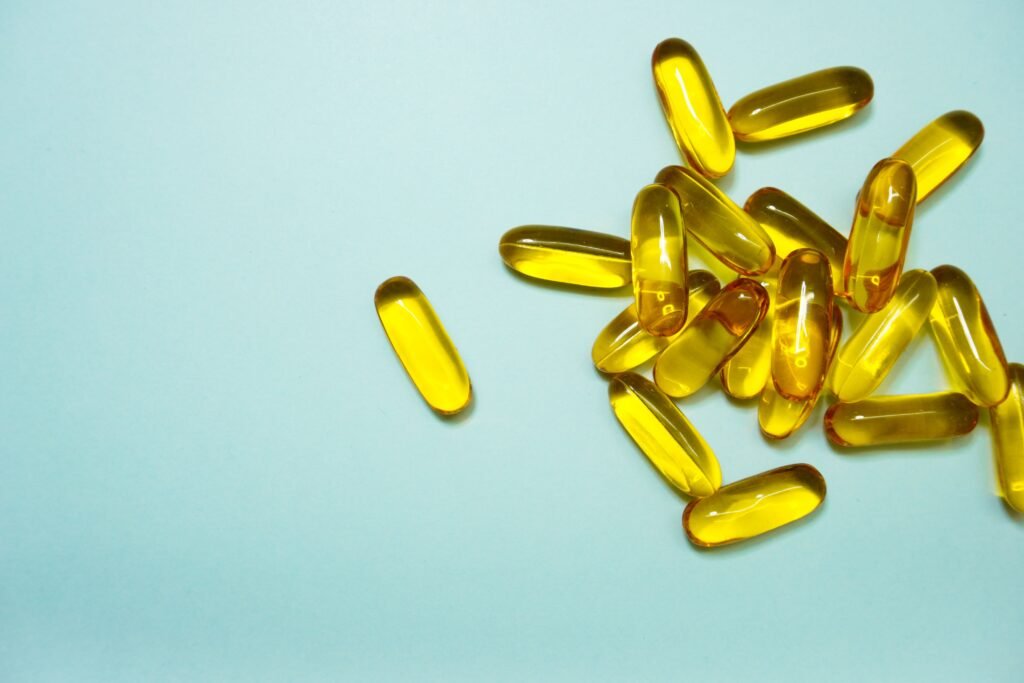
If you’ve wandered down the supplement aisle lately, you’ve probably seen fish oil capsules marketed for everything from heart health to mood support. But does the science actually back up the mood claims? A 2019 meta-analysis published in Translational Psychiatry took a close look, and the answer turns out to be more nuanced than a simple yes or no.
The Study
Researchers pooled data from 26 randomized, placebo-controlled trials involving over 2,100 participants to evaluate whether omega-3 polyunsaturated fatty acids (PUFAs) — specifically EPA and DHA, the two main compounds found in fish oil — actually improve depressive symptoms. This wasn’t a single study but a rigorous synthesis of nearly two decades of clinical trial data, searched through the end of 2017.
The Headline Finding
Overall, omega-3 supplementation showed a modest but statistically significant benefit for depression. The effect size was small, but real.
Not All Fish Oil Is Equal
The more interesting story is in the details. The researchers split the supplements into categories based on their EPA-to-DHA makeup, and the results diverged sharply:
- EPA-dominant formulas (60% or more eicosapentaenoic acid) showed meaningful antidepressant benefits, especially at daily doses of 1 gram or less.
- DHA-dominant formulas (docosahexaenoic acid) showed no measurable benefit for depression at all.
That’s a striking distinction, given that most consumer fish oil products don’t emphasize this ratio on the label. If you’re taking omega-3s specifically hoping for a mood boost, this research suggests it matters which fatty acid dominates the capsule — and that more isn’t necessarily better, since higher EPA doses didn’t show the same benefit as the lower ones.
Why Might EPA Work Where DHA Doesn’t?
The authors point to EPA’s distinct role in the body. Unlike DHA, EPA doesn’t accumulate heavily in brain tissue; instead it’s rapidly metabolized and appears to act as an anti-inflammatory agent, dampening the production of inflammatory molecules increasingly linked to depression. EPA may also support neuroprotection and interact with receptors that regulate inflammatory pathways in the brain — mechanisms DHA doesn’t share to the same degree.
The Caveats
The researchers are careful to note real limitations. There was significant variability across the included trials, differences in dosing, patient populations, and depression severity that couldn’t be fully controlled for. Only two trials examined DHA-only formulations, which is too small a sample to be conclusive about DHA’s true potential. And no study followed patients long enough to establish whether these benefits hold up over time.
The Takeaway
This isn’t a green light to self-treat depression with supplements instead of professional care. But for people already considering omega-3s, or discussing options with a clinician, the evidence points toward EPA-rich formulations at modest doses as the more promising choice — not simply “more fish oil is better.”
As with any supplement decision that intersects with mental health treatment, this is worth discussing with a doctor rather than deciding alone.
Source: Liao, Y., Xie, B., Zhang, H. et al. “Efficacy of omega-3 PUFAs in depression: A meta-analysis.” Translational Psychiatry 9, 190 (2019). https://doi.org/10.1038/s41398-019-0515-5
[Book an appointment here] — Ready to get a more complete picture of your mental health? Contact us to schedule an outpatient psychiatric evaluation today.
About the Author
Stephanie Schabel, PMHNP-BC, is a board-certified Psychiatric Mental Health Nurse Practitioner at SKS Psychiatry specializing in functional and integrative psychiatry. She holds nursing degrees from Texas State University and Gonzaga University, and is a member of Psychiatry Redefined, one of the nation’s leading training programs in functional and integrative psychiatry. Stephanie’s approach combines evidence-based psychiatric care with root-cause, whole-person treatment for depression, anxiety, ADHD, and related conditions.
Disclaimer: This content is for informational purposes only and does not constitute medical advice. Please consult a licensed mental health professional for diagnosis and treatment recommendations specific to your situation.